

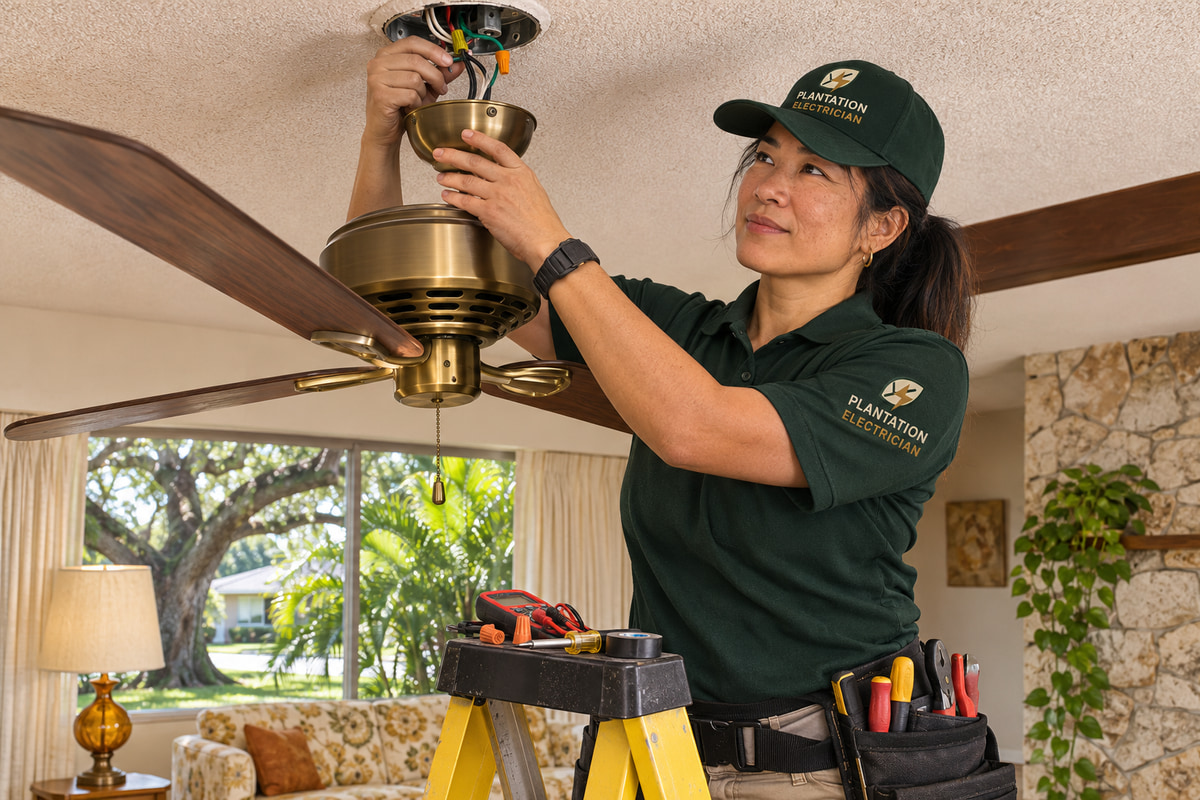
Four kinds of property sharing one busy area
The mall at Broward Boulevard and University Drive is a landmark many residents use to explain where they live. Retail strips and apartments surround it, and older houses sit on streets within a short drive. If you map the electrical needs of an area like this, you find at least four different kinds of property, each with its own questions: single family houses, apartments, storefront tenants, and the shared exterior spaces such as parking lots that tie everything together.
A house owner thinks about panels, circuits, outlets, lighting, and storm readiness. An apartment resident thinks about what they are allowed to change and whom to call when something stops working. A shop tenant thinks about opening day, equipment, signage, and not losing customers when the power blinks. A property manager thinks about all of the above on behalf of others, plus the lot lights and the common areas. Good electrical help in this area needs to recognize which of these conversations it is having, and adjust.
This variety is the signature of a commercial crossroads. Intersections of major roads attract retail, and retail attracts people who need housing nearby. Over time, the pattern layers: older houses from earlier decades, apartment complexes placed near the traffic, and retail strips with their parking. Each layer was built under the practices of its time, which means the electrical systems in the area span a wide range of ages and standards.
For visitors from outside the area, it is worth saying that nothing here is exotic. The same fundamentals apply: panels need to be sound, circuits sized to their loads, devices protected, and work done to the standards that apply to the property type. The variety is simply a reason to avoid one size fits all advice. What suits a house with a 1960s panel is not what suits a tenant space with a bank of meters in a back hall.
This page describes the kinds of conditions that are common in areas with this mix, drawn from general knowledge of residential and commercial buildings. It makes no claims about specific businesses or addresses. If you recognize your situation here, treat the ideas as questions to bring to a conversation, and expect that the real answers depend on what an electrician finds when looking at your property.
Houses on the streets near the mall
Residential streets near a busy intersection often have houses that predate the commercial development around them. Owners live a short walk from stores and traffic, with the benefits and the quirks that come with it.
Electrical needs in these houses follow the age patterns found across Plantation. A house from the middle of the last century may have a smaller panel, two slot outlets, and wiring that has been extended over time. A house from a later decade may have grounded outlets and a larger service, with aging devices and the occasional overloaded circuit. In both, the most common requests involve outlets and switches that no longer work well, kitchens that need more circuits, and panels that need replacing.
Proximity to a commercial area affects some things. Streetlights and signage create ambient light, so outdoor lighting at homes can be modest. Traffic noise raises the value of well placed ceiling fans and quiet bathroom vents. Delivery trucks and parking lot activity make doorbell cameras and exterior security lighting popular, and those devices need reliable low voltage power and good network connections.
Power quality is another practical concern. Houses near commercial feeders sometimes notice brief flickers when large equipment on the same transformer starts. Most of the time this is a utility matter that is out of the homeowner's hands, but whole house surge protection and point of use protectors for sensitive electronics are sensible measures anywhere, and especially in a lightning prone region.
Home based businesses are common close to commercial areas. A person running a design studio or a consulting practice from a spare room adds computers, printers and sometimes client visits to a space meant for sleeping. Dedicated circuits for equipment, enough outlets to avoid power strip chains, and surge protection with battery backup for important machines make the work from home setup more dependable.
If your house is older, consider an electrical review before major renovations. The panel, the attic wiring, the service mast and the grounding are the main items. A review gives you a baseline and an ordered list of what to fix and when. It also helps if you plan to sell, since buyers and inspectors often ask about the age and condition of the panel and about protective devices.
Apartments, and what renters and owners can actually do
Apartments make up a large share of the housing around busy retail intersections, and their electrical situations are different from houses in important ways.
Each unit has its own panel, usually small and located in a closet, hallway or utility area. The building has a meter bank and a service sized for all the units together. A resident can see and reset breakers in their own unit, but not the building's service equipment, which belongs to the owner or manager.
When something stops working, the first questions are simple. Is the problem limited to one outlet, one room, or the whole unit? Check the breakers in your panel. Check any ground fault outlets in the kitchen or bathroom, since a tripped device can silence several outlets that seem unrelated. If your neighbors have lost power too, the problem is likely outside your unit, and the manager or utility should be called.
Renters generally should not do electrical work. Leases typically say that repairs go through the landlord or management. This protects the resident and the building. What a renter can do is report problems promptly and clearly: where, since when, what it looks like. Flickering lights, warm outlets, burning smells, buzzing panels and breakers that will not stay on are all things management should hear about right away.
Renters can also reduce risk through habits. Avoid overloading outlets with power strips. Do not run space heaters or window air conditioners on extension cords. Use appliances according to their instructions. Keep the area around the panel clear. Test smoke alarms. If the building provides ground fault outlets, test them monthly.
Unit owners, such as condominium owners, have more flexibility but also more rules. Work often requires approval from an association, and changes to shared walls, ceilings or exterior features are regulated. Common concerns for owners include adding a dedicated circuit for an appliance, replacing a panel, adding an electric vehicle charger, and updating lighting. Each needs coordination: where is the panel, is there capacity, and who maintains the common wiring?
Property managers have a different set of tasks. They handle unit turnovers, where outlets and fixtures are checked and replaced, common area lighting, exit signs and emergency lights, and repairs to the building's distribution equipment. A relationship with an electrician who knows the building shortens response times and helps with planning.
For all parties, clear communication is the best tool. A short written description, a few photos, and a note about which breakers are involved will help an electrician plan the visit and bring the right parts.
One more situation is worth describing because it confuses many people: the shared meter room. In many apartment buildings, the meters for all the units sit together in one room or on one wall, with a disconnect for each unit. A resident whose power is out may find that the main breaker for their unit, which sits in that room, has tripped. Residents are usually not permitted in that room, and for good reason: the equipment inside is energized at the full service rating and is dangerous to anyone untrained. The correct step is to tell management exactly which unit is affected and what happened just before the outage, such as a hair dryer and a space heater running together. That detail helps an electrician decide whether the cause is a unit overload, a failing breaker or a loose connection in the meter bank, and it keeps residents safely out of equipment they should not touch. Residents can also help by knowing which of their own appliances draw the most power, since heaters, hair dryers, window air conditioners and toaster ovens are the usual culprits when a unit breaker trips on a busy evening, and by staggering their use rather than running several at once.
Storefront tenants, small shops and the electrical side of opening a door
Retail strips around a mall hold a rotating cast of tenants: restaurants, salons, boutiques, service providers, offices and more. Each new tenant brings a different set of equipment and a different set of expectations.
Before signing a lease, a prospective tenant should ask what the space already has. How big is the panel? How many spaces are open? Is there a dedicated meter for the space? Are there existing circuits for the kind of equipment planned? An older storefront may have a small panel with few open spaces, limiting what can be added without an upgrade. If an upgrade is needed, who is responsible and who pays are lease questions, to be settled with the landlord.
Once a lease is in place, the buildout begins. The electrician works from an equipment list and a layout. Lighting is planned for the type of business: bright and even for retail, warm for dining, task focused for service counters. Outlets are placed where equipment and displays need them, with enough for future changes. Dedicated circuits are provided for large equipment such as ovens, refrigeration, water heaters, and compressors. Ground fault protection is added where required, particularly near sinks and in food areas.
Signage deserves planning. Exterior signs have their own circuits, often controlled by timers or photocells. The sign vendor and the electrician must coordinate on where power is delivered and how it is controlled.
Emergency lighting and exit signs are required in many commercial spaces. They must work when called upon, so batteries and lamps must be tested and maintained. A fire alarm or other life safety system, if present in the building, may need to be extended or modified for a new layout, which typically involves specialists.
Permits and inspections apply to commercial work, and the local building authority decides what is required. An electrician familiar with the process can help schedule inspections at the right points. Opening a business before required inspections are complete risks delay, so plan for them.
After opening, the electrical concerns shift to reliability. Equipment that restarts when a compressor kicks on, lights that flicker during the lunch rush, breakers that trip when the oven and fryer run together, and outlets that overheat from cord clutter all point to loads exceeding capacity. Adding circuits, redistributing loads, and installing surge protection for point of sale systems resolve most of these.
When a tenant leaves, the space is returned according to the lease. Electrical items to address include labeling the panel, removing abandoned wiring if required, and documenting the state of the space.
Busy roads, big parking lots and the power outside the walls
A commercial crossroads has a lot of electricity outdoors. Parking lot lights, building facade lights, signs, landscape lighting, irrigation controllers, and sometimes charging stations all run on circuits that live outside the buildings.
Pole lights in large lots are fed by buried cable running from a panel or a dedicated controller. They are controlled by photocells, timers or a lighting control system. When one goes out, the cause may be a failed lamp or driver, a failed photocell, a tripped breaker, or a break in the buried cable. Several lights out in a row suggests a cable or breaker problem upstream. Finding it requires methodical testing, starting at the controller and working outward.
Vehicles, weather and landscape work are the main enemies of buried cable. A delivery truck backing over a junction box lid can crush it. Landscaping crews can cut cable with a trencher or a stake. Water entering a failed splice can create a ground fault. For these reasons, junction boxes in lots are best of a rugged, sealed type, and records of where cable runs are valuable.
Facade lighting and signs go through frequent change as tenants change. A sign circuit that was sized for one sign may need to be changed for another. Neon and LED signs have different power supplies and loads. Photocells fail, and timers drift. A visual check of exterior lighting at night, walking the property, catches problems early.
Safety is a large part of exterior lighting. Well lit parking areas and entrances reduce accidents and make people feel safer. Consistent lighting levels, with no dark patches between poles, matter more than raw brightness. Where complaints about dark areas arise, a lighting plan can address them using fixture changes, additional poles or better aiming.
Electric vehicle charging is becoming more common at retail locations. Adding charging stations requires attention to capacity, load management, and permits. Parking spaces, conduit routes, and trench work in a paved lot are significant parts of the cost and planning.
Storms matter for exterior systems. Lightning, wind and flooding can disrupt service, damage fixtures and knock out signs. Surge protection at distribution panels, secure mounting for fixtures, and elevated equipment pads reduce damage. After a storm, inspect exterior equipment before restoring power. Look for broken fixtures, exposed wires and water in enclosures.
Property managers can simplify things with a regular schedule. Walk the property after dark each month. Keep a log of outages and repairs. Maintain an up to date drawing of the exterior circuits. These small habits make repairs faster and cheaper.
Matching the visit to the property
Because the area holds such different kinds of property, the way an electrical visit is planned varies too.
For a house, the first call is about the symptoms and the age of the home. The visit is a walk through the rooms, the attic if accessible, the garage and the panel. The result is a plain explanation and a plan. Small tasks may be done on the spot after a quote is agreed. Larger ones are scheduled.
For an apartment, the first step is often the manager. Management knows the building, the panel locations and the rules. If a resident reports an issue, management decides whether to call an electrician. Information about which unit, which circuit and what symptoms helps.
For a storefront, the call starts with the business: what it does, what is changing, and when it needs to open or reopen. A visit to the space follows, with a look at the panel, the existing circuits, and the equipment list. Landlord coordination is part of the plan. Work that interrupts business is scheduled for off hours when possible.
For shared exterior systems, the call usually comes from a manager. A visit to the property includes a nighttime inspection if lighting is involved, and testing of controllers and circuits.
Across all of these, a few principles hold. A quote follows a conversation, not a guess. Complicated jobs need an on site visit. Safety hazards come first. Permits and inspections are handled as required. Work is tested and explained. Records are updated.
When you call, have the following ready.
- The type of property and its approximate age.
- What you noticed, where, and since when.
- Whether the issue follows weather, equipment, or time of day.
- Who owns or manages the property if you rent or lease.
- Any deadlines, such as an opening date or an inspection.
A final example: a salon tenant in a strip center finds the breakers trip every afternoon when dryers and a water heater run together. The conversation covers what equipment is running, when, and on which circuits. A visit reveals that three dryers share one circuit and the water heater shares a panel space with another load. The remedy is to give each heavy appliance an appropriate circuit, rebalance the panel, and check that wire sizes suit the loads. The landlord is notified because panel space is limited. Nothing about the fix is mysterious once someone traces the circuits and reads the nameplates, which is why the visit matters.
Typical requests in this part of Plantation
Calls from around the mall tend to come from a mix of customers.
- Houses. Panel replacements, dead outlets, kitchen circuits and surge protection.
- Apartments. Repairs coordinated with management, including outlets, fixtures and breakers.
- Storefronts. Tenant buildouts, new circuits for equipment, lighting and signage.
- Parking lots. Pole lights, photocells and buried cable faults.
- Emergency lights and exit signs. Testing and repair in commercial spaces.
- Chargers. Planning capacity and conduit routes for electric vehicle charging.
Nearby neighborhoods and corridors
The Midtown district, with its mixed use buildings, is right next to the mall area, and the University Drive and Sunrise Boulevard corridors lead off in different directions. The neighboring city of Sunrise, and the established streets around Fig Tree Lane, are covered on separate pages here. If your property is better described by one of those, start with that page.