

A compact city with a clear age
Lauderdale Lakes is east of Plantation, and one fact about it is useful to keep in mind from the first phone call: many of its homes and condominiums were built in the 1960s and 1970s. That is a fairly narrow window, and it gives the city a recognizable character. Buildings from those two decades share construction methods, floor plans and, to a large extent, electrical design. For an electrician this is a gift, since patterns repeat and experience carries over from one building to the next.
It also means that many properties are now fifty to sixty years old. That sentence should not alarm anyone. A building that age has been through a great many storms, tenants, owners and repairs, and it is still standing and in use. But electrical components do have working lives. Breakers, switches, outlets, fixtures and wire insulation all age, and the demands placed on them have grown steadily. A home that once ran a few lamps, a television and a refrigerator now runs a great deal more.
It is worth separating three kinds of change when thinking about an older building. The first is wear: parts that have simply been used for a long time, such as loose outlets and tired switches. The second is growth: new loads that the original design did not foresee, such as bigger air conditioners and home offices. The third is damage: conditions caused by water, heat, rodents or past mistakes. Each calls for a different response. Wear is handled by replacing parts. Growth is handled by adding capacity and circuits. Damage is handled by finding and repairing the cause first.
This page speaks in general terms about homes of this era, because we cannot know your particular building from a distance. That is true whether you own a single family home, a unit in a condominium building or a small commercial space on one of the main roads. What we can do is give you a clear sense of the questions to ask and the signs worth noticing, so that when you call, you can describe things precisely and make good decisions about what to do first.
If you are unsure how old your building is, there are clues. Look at the panel for labels or brand marks, check outlets for a ground slot, and look at fixtures and ceiling boxes. Better still, ask the management office or look at paperwork from your purchase. An electrician will also read the clues on arrival.
Homes of the 1960s and 1970s: what the decades left behind
Single family homes from the 1960s and 1970s in this part of Broward County are usually one story, concrete block houses on slabs, with attics above and an air handler somewhere inside. Some have carports or garages, and many have been extended with screened porches or additional rooms. Their electrical systems share certain traits, which are worth describing carefully and without exaggeration.
Panels from these decades are often modest in size. A household that today wants to run central air conditioning, a range, a clothes dryer, a water heater and several small appliances at once may find that the panel is full or that its main breaker is working near its limit. Signs include breakers that trip under moderate loads, flickering when large appliances start and add on breakers installed beyond what the panel was designed to hold. A professional will check the label on the panel and the ratings of its parts to see what can safely be added.
Wiring materials from this period vary. Houses from the 1960s commonly used copper conductors, while some from the late 1960s and 1970s in the country as a whole used aluminum branch circuit wiring for a time. This is a general historical fact, and it does not mean any given house has it. The only way to know is to look at the wire, and an electrician can identify what is present at the panel and at outlets. If aluminum wiring is found, there are well established methods to deal with connections safely, and the electrician can explain them.
Other common features include:
- Two prong outlets in older rooms. These have no ground connection and give less protection for modern electronics.
- Limited outlets. Bedrooms and living rooms often have only a few, leading to power strips and extension cords.
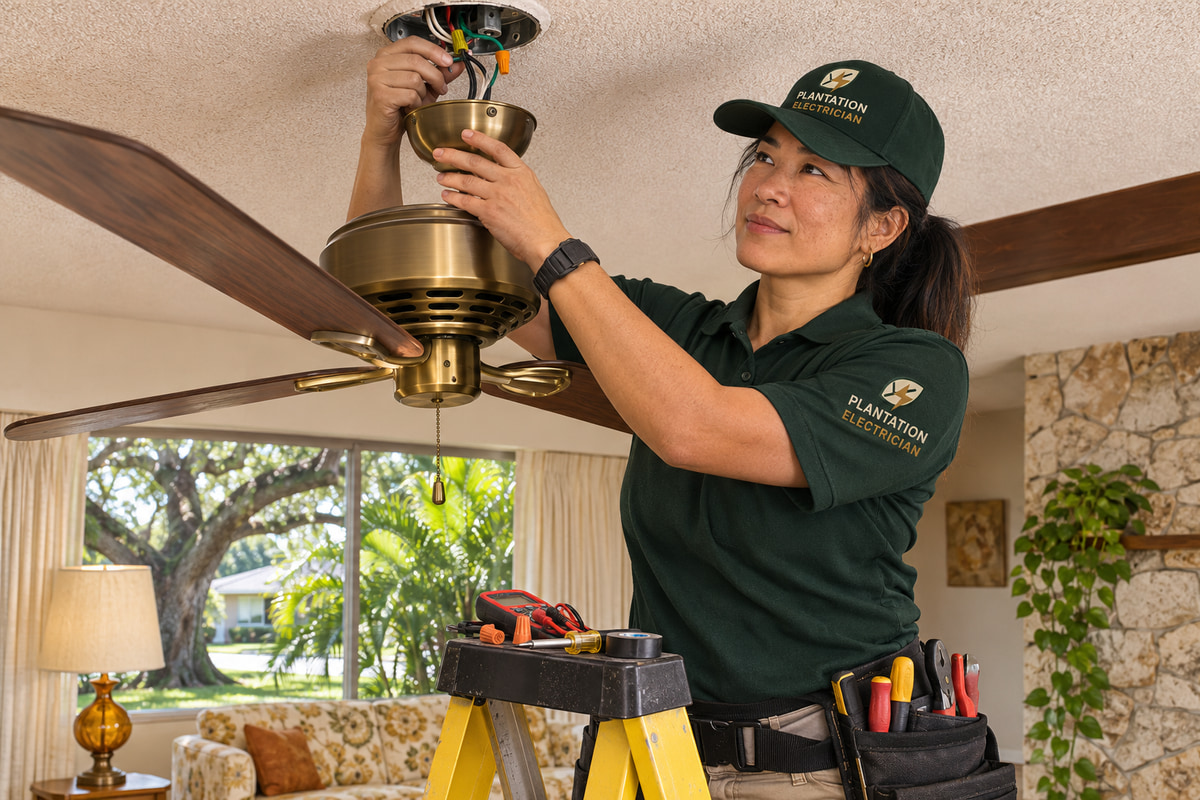
- Older ceiling fixtures. Boxes may not be rated to support a heavy ceiling fan, which is a safety matter when a fan is added.
- Original switches. Some have lost their springiness and crackle or get warm.
- Attic wiring. Hot attics can dry out insulation, so wires that are bent or disturbed may crack.
None of these is a reason to panic. Each is a normal finding, and each has a normal fix. The most useful approach is to have the house looked over once, receive a prioritized list and fix the highest priority items first. A written list also makes a good record for insurance and resale.
One more reminder concerns do it yourself work in homes of this age. Opening a box of old wiring can reveal brittle insulation, mixed materials or hidden splices. Replacing a switch is a simple task in a modern house but can be tricky in an old one. Our page on what homeowners can safely do themselves describes where to stop and call a professional.
Condominium life: shared buildings, shared rules
Many condominiums in Lauderdale Lakes were also built in the 1960s and 1970s, and they raise questions that single family owners never meet. At the center is the boundary between what the owner is responsible for and what the association is responsible for.
Generally, the unit's panel, circuits, outlets, switches and fixtures are the owner's concern, while the building's service equipment, risers, hallway lighting and common systems belong to the association. Where exactly the line falls is set by the community's documents, and it is best to read them or ask the management office before starting any work. A repair that looks like a small unit matter can actually involve shared equipment, such as when a feeder to a group of units is the cause of low voltage.
Condominium work has its own rhythms. Many associations require approval of the work and the contractor, advance notice to neighbors, limits on hours and protection of common areas such as hallways and elevators. A permit may also be required. Asking about these items first prevents delays. When an electrician arrives, it helps to have the building rules at hand.
Typical unit level projects include:
- Replacing a unit panel. This improves capacity and safety, but needs approval and a permit.
- Adding ground fault protection. Kitchens, baths, laundry spaces and balconies benefit.
- Adding circuits. A new air conditioner or kitchen appliance may need a dedicated line.
- Replacing fixtures and fans. Ceiling boxes in concrete ceilings need the right mounting hardware.
- Updating smoke and carbon monoxide alarms. Interconnected alarms may be handled by the building.
Concrete construction affects routing. Walls and ceilings in many condominium buildings are solid, so hiding new wire inside walls is rarely practical. Surface raceway, installed along walls or ceilings, is a neat and permitted way to add outlets without breaking concrete. Some owners dislike the look, but a skilled installer can make it unobtrusive and paint it to match.
Balconies and patios call for wet rated fixtures and ground fault protected outlets, because salt air and rain reach them. Corroded fixtures are a common repair. Replacement with correct parts is a routine job.
Finally, communicate with neighbors. Shutdowns for work on shared equipment can affect many residents. If your work requires turning off power to others, the management office must coordinate. A thoughtful note to adjoining units before noisy work builds goodwill.
State Road 7, Oakland Park Boulevard and the small commercial buildings along them
State Road 7 and Oakland Park Boulevard are key roads in Lauderdale Lakes, and the buildings along them carry much of the city's everyday commerce. Small stores, restaurants, salons, clinics, offices and service shops fill low rise buildings and strip centers, and each depends on dependable power throughout its hours.
Small commercial buildings along busy roads share several electrical traits. They tend to be older, often built or last renovated decades ago. They tend to have changed tenants and uses several times, each time adding equipment. And they tend to have panels that are crowded, with labels that no longer describe what the breakers control.
Here are the questions an owner or tenant can ask to take control:
- What does the panel serve? A current, accurate directory saves hours during a problem.
- What equipment runs all day? Refrigeration, signs, computers and ventilation all matter.
- What happens in an outage? Know what you would lose and what you could protect.
- Who is responsible for what? Landlord and tenant duties need to be clear.
- Is the lighting safe? Exit signs, emergency lights and parking lot lights contribute to safety.
A restaurant, for example, depends on refrigeration, cooking equipment, hood fans and lighting, and the wiring must handle simultaneous loads. A salon runs dryers, water heaters and lighting. A clinic depends on specialized equipment and clean power. A small office relies on computers and network gear. Each needs the electrician to learn the equipment list before recommending anything.
Signs along busy roads draw power, and old sign wiring often has deteriorated. A sign that flickers, hums or fails in the rain should be inspected by a qualified professional, as sign circuits can carry high voltage.
Roadside buildings are exposed to weather, and rooftop equipment, exterior lights and outlets near the parking lot are common trouble spots. Wet rated parts, sealed covers and ground fault protection prevent most nuisance trips and many hazards.
When a space changes use, the electrical service should be checked. Turning a shop into a food service space, or adding a cooler to a small store, can exceed the capacity of a panel. A load check before buying equipment avoids costly surprises. For anything that involves a new circuit or a panel change, a walkthrough on site is necessary, and the building owner often needs to approve plans.
Permits for commercial work are typical, and inspections protect both the tenant and the owner.
Repairs that bring the most comfort and safety for the least disruption
Owners often ask where to start when a building is older and the list of possible improvements is long. A good rule is to begin with items that improve safety, then those that improve daily comfort, then those that prepare for the future. Here is a practical order that suits homes and condos of the 1960s and 1970s.
First, protect against shock where water is near. Ground fault outlets in kitchens, baths, laundry areas, garages and outdoors are among the most useful upgrades in an older building. Many can be added without opening walls, by replacing the first outlet in a circuit with a protected device that also covers the outlets after it. Test them monthly.
Second, address loose or warm connections. Outlets that grip plugs weakly, switches that crackle and covers that are discolored suggest heat. Replace those devices, and have the connections at the panel checked and tightened. Heat is the enemy of every electrical connection, and a loose joint heats more with every passing month.
Third, relieve overloaded circuits. If a hallway, a living room and a bedroom share one breaker, add a circuit or redistribute loads. Families that rely on extension cords are telling you that they need more outlets in the right places.
Fourth, improve lighting. Old fixtures often give weak, uneven light. Replacing them with modern ones, with attention to the box rating and the bulb type, brightens a room and can reduce energy use. Dimmers should match the bulbs, or buzzing and flicker follow.
Fifth, look at smoke and carbon monoxide alarms. Check dates, replace expired units and confirm they sound. In a condominium, ask whether the building has a system.
Sixth, consider surge protection at the panel. Thunderstorms are common here, and a protective device reduces damage from many voltage spikes.
Seventh, prepare for larger plans. If you expect a new air conditioner, a kitchen remodel, a charger or a generator, discuss it now so any panel work covers the future too.
A worked example: an owner of a 1970s condo wants more kitchen outlets, a quieter bathroom fan and relief from a breaker that trips during breakfast. The electrician adds a second small appliance circuit from the panel, routes it in surface raceway above the counter where the walls are solid, replaces the fan with a quieter model and installs ground fault protection near the sink. The total disruption is a morning of work, and the kitchen is transformed for daily use. The plan is simple because the priorities were clear.
Visits, approvals and being ready for storms
Start with a phone call. Tell us the type of building, roughly how old it is, what you have noticed and what you want to achieve. A quote for simple items can start by phone. Complicated jobs, including anything involving panels, new circuits, concrete construction or commercial space, need an on site visit.
To prepare, do the following:
- Clear access to the panel and the areas involved.
- Check with your association or landlord about rules, notice and approvals.
- Write down symptoms, including when they occur and what is running.
- Gather any permits, drawings, invoices or panel directories you have.
- Think about what you may add in the next few years.
At the visit, expect an electrician to listen, test and explain. They will open the panel, check outlets and protective devices, and inspect accessible wiring. They should tell you plainly what is urgent, what can wait and whether a permit is likely. If the job is larger, you should receive a written scope.
Permits and inspections are a normal part of significant electrical work. The city permit office decides what applies. An inspection is a second look at the work, and it protects you and future owners.
Storm preparation fits an older building as well as a new one. Know your main breaker and how to shut it off. Consider surge protection at the panel. Keep flashlights and batteries handy. If you plan to use a generator, run it outdoors, away from windows and doors, and connect it only through a properly installed transfer switch, never through a wall outlet. In a condominium, ask management about the building's plan for outages.
After a storm, avoid standing water near any electrical equipment. Do not touch downed lines. Report damage to the utility. If an outlet, panel or appliance has been wet, do not use it until it has been inspected. Turn appliances back on one at a time as power returns.
A worked example from a small commercial space shows how this goes. A tenant opens a snack counter in a unit along a busy road and adds a refrigerator, a warming cabinet and a coffee machine. By midday the breaker trips and the register resets. The electrician finds the entire counter on one fifteen amp circuit that also feeds the front lights. The fix is two dedicated circuits for the equipment, a ground fault protected outlet at the sink and a relabeled panel. The landlord is told in advance and approves the work, and the tenant avoids losing a day of sales to a tripped breaker. The key was to match circuits to equipment before opening, not after the first bad afternoon.
Another practical point concerns rental homes and units. Owners who rent should arrange a quick electrical walkthrough between tenants, testing ground fault devices, replacing worn outlets and confirming that alarms sound. Tenants should know where the panel is, how to reset a breaker and whom to call. Clear information on both sides prevents small problems from becoming emergencies at inconvenient hours.
Keep records of all work: dates, descriptions and permit numbers. In an older building, this history pays off every time someone has to troubleshoot a problem or answer an insurer's question.
Lauderdale Lakes is a city with a clear age and a practical spirit, and electrical work here is mostly about steady maintenance and sensible upgrades. A little attention each year keeps a sixty year old building comfortable for years to come, and a conversation by phone is an easy first step.
Settings across Lauderdale Lakes
Different parts of the city bring different electrical questions.
- Single family streets. Block homes from the 1960s and 1970s where panels, outlets and attic wiring deserve a look.
- Condominium buildings. Units with concrete walls, association rules and balcony fixtures.
- State Road 7 corridor. Small commercial buildings where capacity and tenant duties matter.
- Oakland Park Boulevard corridor. Shops and offices with signs, parking lot lighting and long hours.
Nearby communities and related reading
Lauderdale Lakes is close to Tamarac, Fort Lauderdale and Coconut Creek, each of which has a page. Our guide to recessed and accent lighting design helps with the lighting upgrades mentioned above, and the explanation of how long electrical projects usually take sets expectations for scheduling.