

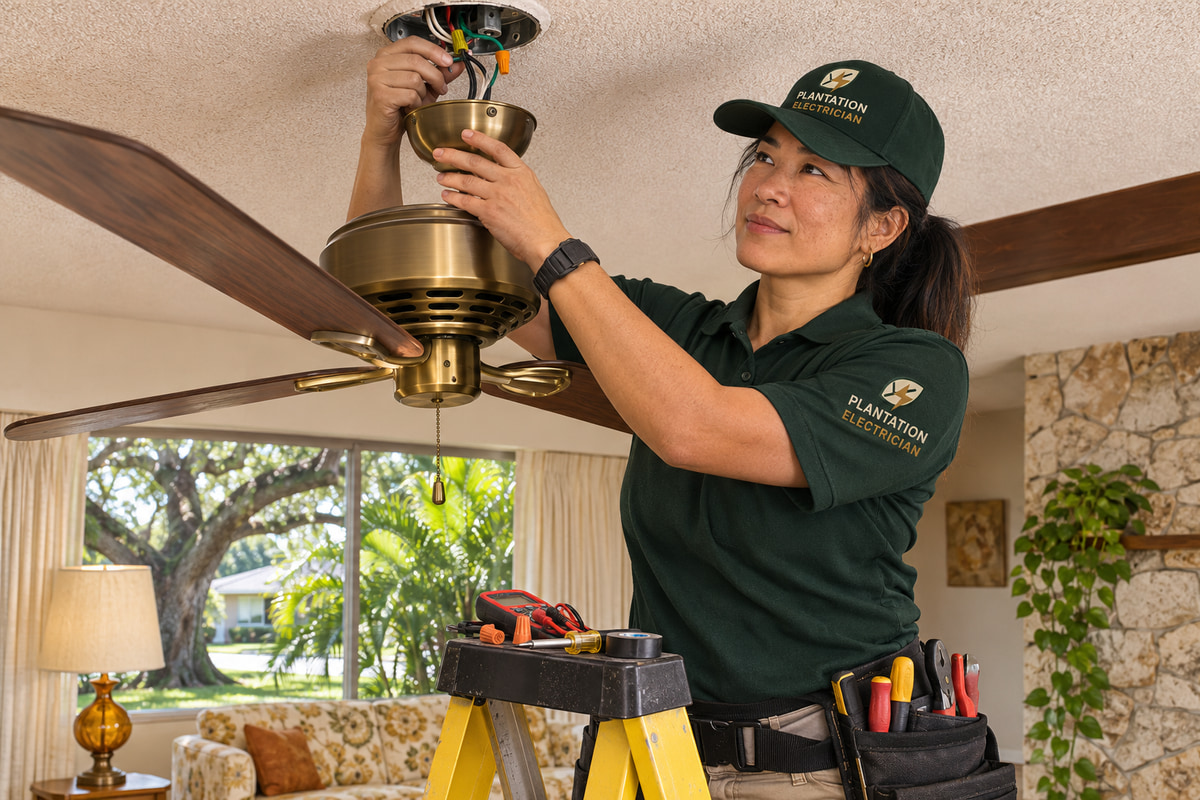
East of Plantation, a settled city with layers of building history
Lauderhill lies east of Plantation, and a drive through it shows a city built in layers. There are single family streets whose houses date from the middle of the last century and later, condominium communities that went up in the 1970s, and commercial strips that line the main roads with shops, offices and service businesses. Each layer was built to the standards of its time, and each has aged in its own way.
Layered cities are interesting for an electrician because no single answer fits. A diagnosis that makes sense in a block of 1950s style houses may be wrong in a condominium from the 1970s, and neither will tell you much about a shop in a strip center. The first job on any call is to find out which layer you are in. That tells us what wiring methods are likely, what equipment is probably present and who has authority over the building.
It also helps to remember that age is not a verdict. Many buildings in Lauderhill are in good working order and have been maintained carefully over the decades. Others have been patched in stages, with a new circuit added here, a replacement outlet there and an air conditioner swapped in a different year, until the original logic of the system is hard to read. Neither situation is alarming. The first needs a periodic checkup. The second needs a tidy up and a clear map.
What most buildings of these eras share is that their electrical systems were designed for lighter use than we put on them now. Air conditioning is larger. Kitchens hold more appliances. Bedrooms hold chargers, televisions and fans. Many households run a home office. All of that shows up as more load on circuits and panels designed when none of it existed.
This page describes common conditions and offers questions to ask, without making claims about any individual street or building. We choose that approach on purpose. Electricity is something to verify with instruments and eyes, and a general article cannot do that for your property. What it can do is help you speak with an electrician in an informed way, and notice the early signs that are easy to deal with before they become urgent ones. When you are ready to describe your situation, a phone call is the place to start, and an on site visit is how a real answer is reached.
Houses of the mid century and after: what to look for
Houses from the middle of the twentieth century and the decades after it form the backbone of many Lauderhill streets. In South Florida these are commonly one story homes on a slab, built of concrete block, with an attic above the ceilings and a panel on an outside wall or in a carport or garage. They were practical houses, and many remain so, but their electrical systems reflect an earlier idea of how much power a household needs.
Here are the usual points of interest, taken room by room and system by system.
- The panel. Look at it. Is it labeled? Are there open spaces? Does anything look scorched, rusty or crowded? An older panel with limited circuits often shows doubled up breakers and wires added over time.
- The wiring. Homes of this period can contain a mix of materials. Older cable insulation may have become stiff with heat in the attic. Where insulation cracks, it exposes conductors, so any wire that crumbles when moved should be looked at promptly.
- The outlets. Two prong outlets mean there may be no equipment ground at that point. Some have been replaced with three prong outlets without proper grounding. A simple tester can show which ones are wired correctly.
- The service. The meter, mast and service conductors are the house's front door for power. Rust, a leaning mast or a loose meter base deserve attention.
A thoughtful approach is to treat these findings as a list, then sort it into three groups: items that affect safety now, items that should be planned within a year or two, and items that are simply good to know. A cracked outlet cover and a missing ground in a bathroom fall in the first group. A panel with few spaces falls in the second. An old but sound switch falls in the third. A written list lets you spread cost over time and avoid decisions made in a hurry.
Many owners in this part of Broward also consider a complete rewiring when a house has deeply aged wiring. Rewiring is a major project, and our page on doing it room by room explains how it can be staged to keep a household livable. It is not necessary for every old house. Often a targeted set of repairs, a new panel and better protection extend the life of the existing wiring for many years.
One more tip is about additions. A screened room, a converted carport or an added bedroom is a common part of a house's history here. These additions were sometimes wired by owners, sometimes by contractors, and sometimes without a permit. Tracing what feeds them helps avoid overloaded circuits. If you discover an addition fed by a thin extension of an older circuit, that is worth fixing.
The 1970s condominium and its particular needs
Many condominiums in Lauderhill date from the 1970s, and they bring a distinct set of electrical conditions. Buildings of this type often hold dozens or hundreds of units. Each unit has its own small panel, while the building has main equipment, feeders running to each floor and common systems like hallway lighting, pumps and elevators. Understanding which is which is crucial.
Inside a unit, the panel is sometimes small, and the branch circuits may be shared more than an owner would like. A typical complaint is that the kitchen, a bedroom and a hallway all lose power together, because the original design combined them. Updating this takes careful planning: new circuits must be pulled through walls or ceilings that may be concrete, so routes are limited. An electrician will look at where the panel sits and how wires could travel before promising anything.
Unit owners often ask about three specific upgrades:
- Panel replacement. A worn or undersized panel can be replaced, usually with association approval and a permit.
- Ground fault protection. Kitchens, baths and balconies benefit from added protection, often possible at the outlet without opening walls.
- Dedicated circuits. A new air conditioner, a washer and dryer or a major kitchen appliance may need its own line.
Association rules shape everything. Some buildings restrict work hours, require notice to neighbors, ask for approved contractors or limit use of the elevator. Before scheduling, ask the management office for the written rules. Provide them to the electrician so the plan fits. If a job requires shutting off power to more than your unit, the building has to coordinate it.
Balconies deserve a word. Outlets and lights on balconies face salt air, humidity and rain. Fixtures there should be rated for wet locations, covers should close, and ground fault protection should be present. Corroded balcony fixtures are one of the most common repairs in condominiums, and replacing them is straightforward when the correct parts are used.
Finally, remember common areas. If a hallway light is out, a stairwell is dark or an exit sign is not lit, tell the management office. Emergency lighting and exit signage are life safety items, and building managers handle their testing and upkeep. An owner reporting a problem helps everyone, and the electrician working on a unit can point out concerns they notice on the way in.
For owners who rent units out, a scheduled look at outlets, smoke alarms and protective devices between tenants is a sensible habit. It is cheaper than responding to an emergency.
Commercial strips along the main roads
Commercial strips run along Lauderhill's main roads, with restaurants, salons, markets, offices, clinics and service shops sharing long buildings and parking lots. These businesses depend on their power every hour they are open, and the electrical issues they meet are typically practical ones.
Consider capacity first. A strip center is built with a certain amount of power for each tenant space. When a business takes over a space and changes its use, for instance a retail shop becoming a restaurant, the equipment load can change dramatically. Kitchen equipment, walk in coolers, hood fans and water heating are heavy loads. Before signing a lease or ordering equipment, a business owner should ask what electrical service the space has, and have an electrician compare it with the planned equipment list.
Consider continuity second. Refrigeration cannot sit without power for long, and point of sale systems, security cameras and network gear need steady supply. A short list of what must stay running helps decide on surge protection, battery backup or a generator connection. For many small businesses a modest set of protective measures costs far less than one bad day.
Consider lighting third. Parking lot lights, signage and building exterior lights are often controlled by timers or photocells that wear out, leaving a dark lot or lights burning all day. Landlords usually control common area lighting, but tenants often control their own signs. A sign that flickers or buzzes needs attention from a licensed professional, since sign wiring operates at higher voltages.
A short checklist for tenants:
- Find your panel and make sure it is accessible and labeled.
- Learn which equipment shares circuits, and avoid plugging heavy loads into the same line.
- Test exit signs and emergency lights if you are responsible for them, and report failures to the landlord.
- Keep a clear space around the panel as required by safety rules.
- Ask the landlord before major electrical changes.
Tenant improvement projects, such as building out a new space, need a careful on site look. Walls, ceilings and slabs differ from one center to another, and so do panel capacities. Permits are common for this work, and inspections help confirm that the space is ready to open. An electrician can coordinate with other trades so lighting, outlets and data lines all end up where the plan needs them.
Roadside businesses also face weather. Rooftop equipment, exterior outlets and signs are exposed to heavy rain, and ground fault devices on the exterior are more likely to trip. Sealed boxes and wet rated covers prevent most of these nuisances.
Safety upgrades that matter most in buildings of this age
If your budget or time is limited, a short set of upgrades delivers the most safety for buildings of this age. They are not glamorous, but they are the changes electricians most often recommend first.
First, ground fault protection where water is near. Bathrooms, kitchens, laundry areas, garages, balconies and exterior outlets are the key places. A ground fault device senses current that leaks out of the circuit, such as through a person, and cuts power in a fraction of a second. These devices are inexpensive compared with what they protect against, and a monthly test button press confirms they still work.
Second, smoke and carbon monoxide alarms in working order. Alarms wear out, and batteries fail. Check the date on each unit and replace any that are past the manufacturer's recommended life. Some buildings have interconnected alarms that must be handled together. Our page on wired and wireless alarms explains the difference.
Third, a look at the panel. A professional can tighten connections, test breakers, check for signs of heat and confirm that labels are correct. Loose connections are one of the common hidden causes of overheating, and tightening them is a quick, valuable task.
Fourth, replacement of worn devices. Outlets that no longer hold plugs firmly, switches that crackle and cover plates that are cracked should be replaced. The parts are cheap and the improvement is real.
Fifth, surge protection. A device at the panel can reduce damage from voltage spikes, which are common in thunderstorm season. Point of use strips add a second layer for sensitive equipment, but they are not a replacement for protection at the panel.
Sixth, attention to what is plugged in. Extension cords and multiplug adapters are for temporary use. If you rely on one permanently, it is a sign that you need another outlet or circuit. Space heaters, window air conditioners and kitchen appliances should be plugged directly into a wall outlet, not a power strip, because they draw large currents.
Finally, know your emergency steps. Know where the main breaker is, keep a flashlight near the panel and teach everyone in the household how to shut off power in an emergency. If a circuit smells of burning, if a breaker is hot to the touch, or if there is smoke, shut off power if it is safe to do so, leave the area and call for help.
None of this is complicated, and none of it requires you to become an expert. It does require attention, and a good electrician is glad to explain each step in ordinary language.
Making a visit productive and what to expect afterward
The best visits begin with a good phone call. Tell us the kind of building, how old you think it is, what you have noticed and what you hope to achieve. A quote for simple items can start by phone, while complicated jobs need an on site visit because the right answer depends on what is in the walls, above the ceiling and inside the panel.
To prepare for the visit, do these things:
- Clear the way to the panel and any outlet or switch involved.
- Write down when the problem happens and what is running at the time.
- Confirm who can authorize work: owner, tenant, landlord or association.
- Gather any permits, drawings, past invoices or panel schedules.
- Think about future projects so the plan can include them.
During the visit, an electrician should listen first, then test. They will look at the panel, test outlets and protective devices, and examine accessible wiring. At the end you should hear a plain explanation: what was found, what is urgent, what can wait, what is needed to fix it and whether a permit is likely. If a job needs a longer quote, expect it to be put in writing after the visit.
If work is performed, ask to see the result. A new circuit should be labeled. A replaced device should be tested. Protective devices should be pressed to verify they trip. A permitted job may be followed by an inspection, where the inspector looks at the work to confirm it meets the code that applies. That is not an extra hurdle; it is the second look that protects you.
Afterward, keep your own record: date, what was done, who did it and where the permit paperwork lives. If you manage a building or run a business, a simple binder or folder serves you well when questions come up.
Storm season is part of life in this area, and a ready household copes better. Know your shutoff, label your panel, consider panel level surge protection, and plan for outages with flashlights and a safe approach to generators. A generator must never be connected to household wiring by plugging it into a wall outlet, because that can feed power back onto utility lines. A properly installed transfer switch is the correct method.
A worked example shows how the pieces fit. Suppose a condominium owner reports that the bathroom outlet trips every time a hair dryer is used and the hallway light flickers when the air conditioner cycles. The electrician starts by testing the bathroom outlet, which turns out to be an old unprotected one that is part of a circuit shared with the bedroom. The hair dryer, a heavy load, is simply overloading that circuit. The solution has two parts: a ground fault protected outlet is installed in the bathroom, and a separate circuit is considered for the room if the panel has space. The hallway flicker is traced to a loose neutral connection at the panel, which is tightened and retested. Neither repair is dramatic, yet together they remove two daily irritations and close off two small risks.
Here is a second example for a business. A small market in a strip center keeps losing a freezer case overnight because a breaker trips when the compressor starts. A quick reset in the morning hides the pattern. An electrician measures the current when the compressor starts, finds that the case shares a circuit with the display lighting, and recommends a dedicated circuit. The owner agrees after hearing that spoiled stock costs more than the wiring. The lesson is to treat repeated tripping as information and fix the cause the first time it appears.
Lauderhill rewards the same habits as anywhere: look, label, test and ask. Small steps taken in calm weather make the rough days easier, and they keep older buildings working comfortably for years to come.
Settings across Lauderhill
Different parts of the city raise different electrical questions.
- Single family streets. Mid century and later houses where panels, grounding and attic wiring deserve a checkup.
- Condominium communities. Units from the 1970s where association rules, balconies and panel capacity guide the work.
- Commercial strips. Shops and offices where capacity, continuity and signage matter.
- Renovated properties. Buildings with mixed old and new work that benefit from a clear map of circuits.
Nearby communities and related reading
Lauderhill is near Plantation, Davie and Coral Springs, and each has its own page. Our guide to room by room rewiring explains how a major update can be staged, and our page on pool electrical planning covers a project common in the region.